
|
Quantity
|
Out of stock
|
||
|
|
|||
|
|
|||
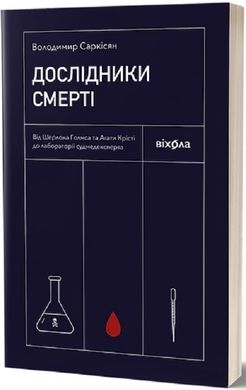
Why did Sherlock Holmes flog corpses in the anatomist, who is a thanatologist, and how did British legislation restrain the development of medicine? Can cyanide be detected by smell, and can a drop of nicotine kill a horse? How does chemistry help identify bullets, and why should you stay away from antifreeze?
In his new book, chemist Volodymyr Sarkisian will talk about what happens in the forensics laboratory, how Ukrainian toxicologists detect poisons, and ultimately, in which aspects even the well-known master of the detective genre, Agatha Christie, is wrong.
The chemist prepares classic detective stories and dispels stereotypes, explains whether garlic could harm vampires and why not only silver bullets are suitable for fighting werewolves. The author explains how approaches to poison detection have changed over time and the relationship between ghost stories and carbon monoxide poisoning.
Volodymyr Sarkisyan is a chemist, former forensic medical expert, and journalist. Author of the book "Everyday Chemistry". From shampoo and washing powder to fried potatoes."
The author devoted 14 years to work in forensic medicine, after which he radically changed the field of activity. After the events of May 2, 2014, in Odesa, he joined the expert journalist commission "May 2 Group". Since 2015, he has been working in the field of socio-political and popular science journalism; in particular, in 2019, he published the book "May 2. Myths and propaganda", in which, from the point of view of a forensic doctor, the main theses of this episode of the information war against Ukraine are refuted.