
|
Quantity
|
Out of stock
|
||
|
|
|||
|
|
|||
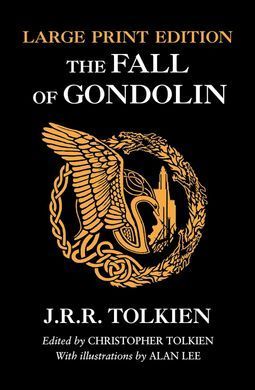
In The Tale of the Fall of Gondolin, there are two great powers in the world. There is Morgoth, of the greatest evil ever seen in history, but who commands a vast military force from his fortress of Angband. Deeply opposed to Morgoth is Ulmo, second in power only to Manwë, leader of the Valar. Central to this feud between the gods is the city of Gondolin, beautiful but undiscovered. It was built and inhabited by the Elves of the Noldorin, who, having settled in Valinor, the land of the gods, rebelled against their rule and fled to Middle-earth. Morgoth hates and fears Turgon, King of Gondolin, and seeks in vain to discover the wondrous hidden city, while the gods in Valinor, in heated debates, for the most part refuse to interfere in support of Ulmo's wishes and designs. Into this world comes Tuor, cousin of Turin, instrument of Ulmo's design. Guided by the unseen, Tuor sets out from the land of his birth on a terrible journey to Gondolin, and in one of the most arresting moments in the history of Middle-earth, the sea-god himself appears before him, rising from the ocean in the midst of a storm. In Gondolin he becomes great; he marries Idrila, daughter of Turgon, and their son is Eärendel, the profound significance of whose birth is foretold by Ulmo in the coming days. Finally comes the terrible end. Morgoth learns through an act of supreme betrayal all he needs to make a devastating attack on the city with Balrogs and dragons and countless Orcs. After minutely observing the fall of Gondolin, the tale ends with the escape of Tuor and Idrila, with the child Eärendel, who looks back from a cleft in the mountains as they flee southward to the burning ruins of their city. They traveled to a new story, "The Tale of Eärendel", which Tolkien never wrote, but which is drawn from other sources in this book. According to J.R.R. Tolkien, it was ``the first real story of this imaginary world'', and he considered it, along with ``Beren and Lúthien'' and ``The Children of Hurin'', one of the three ``Great Tales'' of all time.