











|
Quantity
|
Out of stock
|
||
|
|
|||
|
|
|||
How did curatorship emerge in the form in which we perceive it today as an integral part of the artistic and cultural field? What ideas, practices, and figures stood at the origins of this activity, without which it is difficult to imagine any exhibition project today?
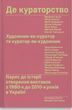
Isn’t it true that the most famous curator of our time, Hans Ulrich Obrist, dedicated his book “A Brief History of Curatorialism” to these questions. In it, he documents the legacy of iconic curators and innovative ideas in this field, starting from the 1960s, and also presents a unique selection of 11 interviews with pioneers of curatorial work. Among them: Harald Seemann, Walter Hopps, Johannes Kladders, Jan Löring and others.
These texts trace the development of the curatorial field—from the early practices of independent curatorship in the 1960s and 1970s and the experimental institutional programs that were emerging in Europe and the United States—to documenta and the emergence of the biennale. Conceived as an “act of protest against forgetting,” this volume has gained wide recognition as a basic book for students and professionals, and is a bestseller on its subject.