

|
Quantity
|
Out of stock
|
||
|
|
|||
|
|
|||
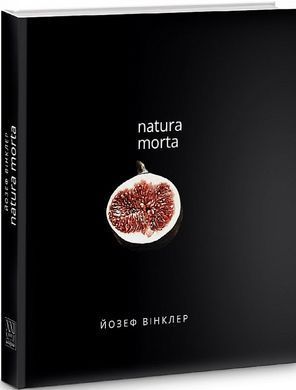
Bright, extraordinary, repulsive, beautiful. Josef Winkler will not leave anyone indifferent. One can talk endlessly about his "Natura morta". And here are a few words from literary critic Bohdan Storokha and translator Nelia Vakhovska.
"Winkler is important and necessary because he reveals the layers and aspects of experience, voiced in him so that they become a discovery of not only meaningful but also a purely aesthetic experience. With him - as with Gabriel Witkop: it can bore you, distract you - but it is a top model of style, without which knowledge about literature is incomplete. And I started reading it precisely from "Natura morta", I just swallowed it because when reading these lines, it is impossible to hold back, not to want to run ahead and not to find out "what will happen next". And this was also one of the indicators that the author is unusual and extraordinary. In general, I do not like to read small prose form - there is too little space for fantasy from the world of purely literary and aesthetic phenomena, but Winkler's text is different. During reading, almost physiological reactions occur; you can objectively understand what philosophers mean when they talk about the fusion of body and text. The book "sticks", and it "sticks" - not because of the unusualness/scandalousness of the plot/story (although for the vast majority of readers, this may be the case), it is the result of a masterful mastery of the way of speaking. Expressive, sometimes caustic images, oversaturation, and redundancy of the subject-phenomenal world - but for me, his works are primarily syntax. You can sell your soul for such a syntax; it is so complete and majestic." - Bogdan Storokha
"Winkler does not invent reality but transforms the seen into a fiction fixed in language. And he is playing - although it is sometimes difficult to assume, given his thick textual canvas and painful themes. For example, "Natura morta" is divided into "painting" and "cinematic" parts. In the first - a sprawling baroque picture of the Eternal City as the Eternal Bazaar - we are greeted by the Stilleben, almost a Flemish sketch from life, dead flesh and countless black, sad goat heads with bent horns, contrasting with the full of life, cheerful and lustful butchers, in endless vignettes of red chicken combs and the Italian language. And then one time - and we are already in Pasolini's film, where there is a church, and prohibition, and sex, and drama, from which the narrator distances himself by sudden changes of perspective, cold illumination of details, sudden twists of the plot ... showing that "the rest is literature ". - Nelia Vakhovska
Josef Winkler (b. 1953, Carinthia) is an Austrian writer and laureate of awards, including the I. Bachmann (1979), A. Döblin (2001), G. Buchner (2008) and the Great Austrian State Award for Literature (2007). The trilogy "Wild Carinthia" ("The Human Child" (1979), "That Ackermann of Carinthia" (1980), and "Mother Tongue" (1982)) made him famous, in which the author focused on the themes of oppression, Catholicism and homosexuality in the Austrian province.