
|
Quantity
|
Out of stock
|
||
|
|
|||
|
|
|||
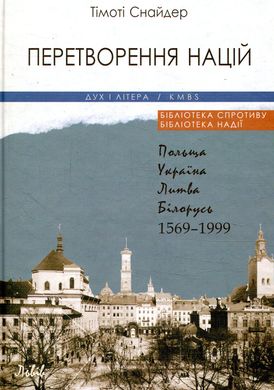
In his book, the famous American historian, Yale University professor Timothy Snyder, examines the phenomenon of the birth of modern nations. The book begins with a consideration of creation in the 16th century. The Polish-Lithuanian Commonwealth is the largest state of early modern Europe. At the end of the 20th century, with which this study ends, the lands of the former Polish-Lithuanian Commonwealth were divided among themselves by states named after the nations: Poland, Ukraine, Lithuania, and Belarus.
According to the most widespread idea of nationality at that time, the state borders were supposed to encompass linguistic communities. How did four modern ones emerge from one early modern national idea? The author's answer is intended to attract the attention of professional historians, as well as people who care about their own identity.