

|
Quantity
|
Out of stock
|
||
|
|
|||
|
|
|||
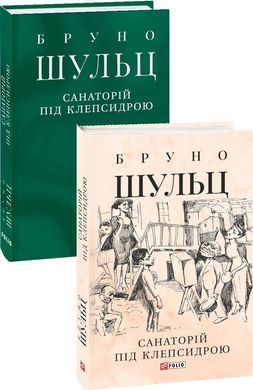
All of Bruno Schulz's work can be viewed as a reminiscence of the impressions and experiences he had from his childhood in a patriarchal Jewish family in Drohobych, a Galician city with its own way of life, traditions, and customs. This is evidenced by his second book, "Sanatorium under the Hourglass," published in 1937, in which, as in "Cinnamon Shops," Schulz's unique style was best manifested: his unusual narrative style, figurative language, and juicy metaphors, thanks to which the mythological image of the City created by the writer's creative imagination comes to life on the pages.
Critics call Bruno Schulz's work a phenomenon of Galician culture and put his works on a par with the works of Marcel Proust and Franz Kafka.