

|
Quantity
|
Out of stock
|
||
|
|
|||
|
|
|||
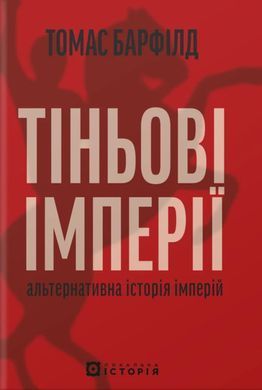
In his book Shadow Empires, American anthropologist Thomas Barfield offers a new perspective on the global history of empires over the past 2,500 years. In his vision, empires come in two forms: endogenous, as centralized entities that grow from internal resources (China, Rome, Persia), and shadow, or exogenous, that are formed in interaction with more powerful civilizations on their peripheries. Barfield exquisitely guides the reader through the variety of imperial forms — from Athens, the Carolingians, and the Umayyads to the nomadic models of the Huns, the Mongol Empire, and the Manchu Qing dynasty. Among them is Kyivan Rus’ — a vacuum empire that emerged between the steppe and the forest, in areas that lacked established imperial structures.
Many of the strategies that empires developed in the past are still in effect today. Russia has evolved from a shadow entity to a centralized system with colonial ambitions. China continues the tradition of imperial self-reproduction, combining nationalism and communism. The European Union, despite its post-national character, partly imitates the Holy Roman Empire, and the United States, without recognizing its imperial identity, actually performs its global functions.
“Shadow Empires” is a conceptual map of the history of power, which allows us to see the known world in a new light and better understand how the peripheries of the past became the centers of power of the present.