
|
Quantity
|
Out of stock
|
||
|
|
|||
|
|
|||
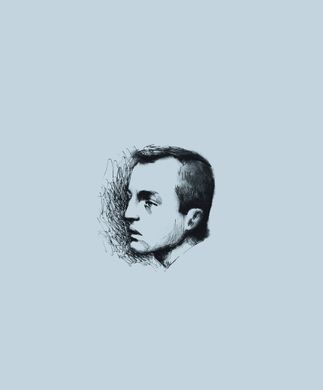
That Frank O’Hara’s Collected Poems would turn out to be such a substantial volume would surprise anyone who knew him. But it would have surprised Frank himself the most. Sketching them in his spare moments in his office at the Museum of Modern Art, on the street during lunch, or even in a crowded room, he would usually scatter them on notebooks and cards and forget at least half of them. Once, when a publisher asked him to prepare a manuscript, he spent weeks and months combing his apartment, excited and frustrated at the same time, trying to somehow fit it together. In the end, he abandoned the project, not because he didn’t want to see his stuff published, but because his thoughts were elsewhere, in the urban fantasy world from which it all came. For his poetry is everything in the world except literature. It is part of that modern tradition that rejects artistry and literaryity, that which turns to Apollinaire or the Dadaists, to the collages of Picasso and Braque with their ephemeral newspaper clippings, to Satie’s musique d’ameublement, which was not intended for listening. He had studied music at Harvard and composed a little, and although he also wrote poetry, he was much more influenced by modern music and art than by what was happening in American poetry. It was therefore not surprising that his texts at first seemed so confusing to readers—they completely disregarded the rules of American poetry at the time, which had gradually slipped from Pound and Eliot to the academic establishment of the 1940s. To disregard the rules is always a provocation, and since his poetry itself was full of provocative sensuality, it was met with that sympathetic silence usually reserved for completely unacceptable profanity.
John Ashbery, from the preface to Frank O'Hara's Collected Poems