When missiles strike book warehouses, they target more than businesses
Ukrainian publishers have learned to work under extraordinary circumstances. They have adapted to power outages, paper shortages, rising printing costs, disrupted logistics, and a shrinking book market. Yet the summer of 2026 became another stark reminder that Russia's war is aimed not only at Ukraine's cities but also at its culture.
Within just a few weeks, Russian attacks destroyed hundreds of thousands of books, damaged printing houses, publishing offices, and logistics centers. Some editions were lost forever, while others will have to be printed again from scratch. For many publishers, this meant losing months of work, major financial investments, and the ability to release new books on schedule.
When a book warehouse burns, it is not only paper and bindings that disappear. Years of work by authors, translators, editors, designers, illustrators, printers, and booksellers vanish as well. Every destroyed print run is a loss for everyone involved—from the writer who created the story to the reader waiting to discover it.
Summer 2026: One Attack After Another
July 2 — Around 800,000 BookChef books destroyed
A Russian missile strike on Kyiv completely destroyed the central warehouse of Denka Logistics, the logistics partner responsible for storing and distributing books published by BookChef.
According to the publisher, approximately 800,000 books were lost.
These were not only new releases but also titles already prepared for distribution to bookstores across Ukraine. For BookChef, rebuilding the inventory meant restarting a significant part of its publishing program.
July 19 — #knygolove loses nearly 250,000 books
Only two weeks later, another Russian attack targeted Ukraine's publishing industry.
The warehouse of #knygolove was completely destroyed.
The publisher reported the loss of nearly 250,000 books.
In its public statement, the team emphasized that these were not simply copies of books. They represented years of work by writers, translators, editors, designers, printers, and everyone involved in bringing literature to readers. The only consolation was that none of the employees were injured.
Printing houses and publishing offices were also hit
The same attack caused severe damage across the publishing sector.
The Konvi printing house, one of Ukraine's largest printing facilities, suffered extensive destruction.
Nearly 250,000 printed school textbooks were destroyed, along with hundreds of thousands of books that were already in production for various Ukrainian publishers. As a result, numerous upcoming releases had to be postponed or printed again.
The offices of arc.ua were also damaged, while the editorial office of Mison Publishing was completely destroyed, interrupting work on future book projects.
August — Another blow to Ukraine's book distribution network
In early August, another Russian attack struck one of Ukraine's largest book logistics centers.
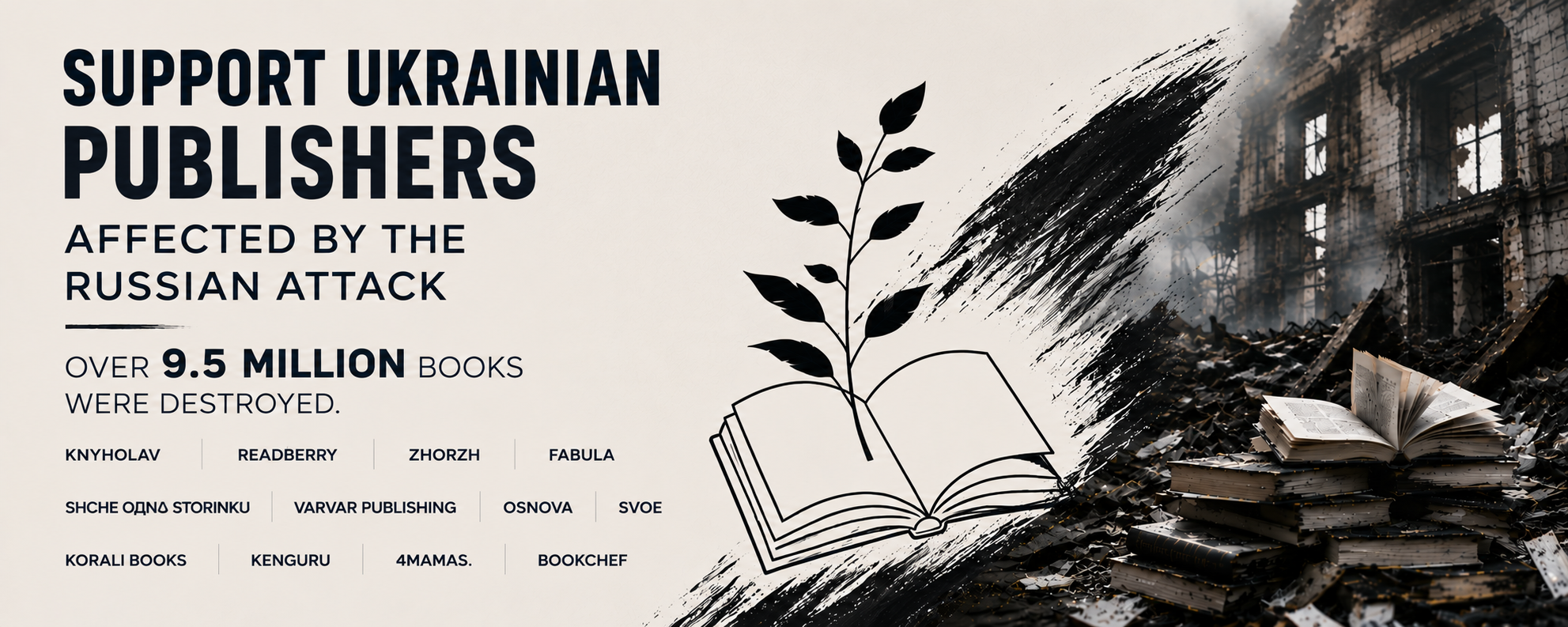
The facility handled books from numerous independent Ukrainian publishers, including:
- Knygolove
- Readberry
- Zhorzh
- Fabula
- Shche Odnu Storinku
- Varvar Publishing
- Osnova
- Svoie
- Korali Books
- Kenguru
- 4mamas
- BookChef
For some publishers, the strike resulted in the loss of a substantial part of their inventory. Others faced severe delivery disruptions, making it impossible to supply bookstores or fulfill online orders on time.
Even when books themselves survived, the destruction of logistics affected the entire Ukrainian publishing ecosystem.
Why Every Reader Should Care
At first glance, the destruction of a warehouse may seem like a problem for a single publisher.
In reality, the consequences spread throughout the entire book industry.
When book inventories are destroyed:
- titles disappear from bookstores;
- new releases are delayed;
- publishers must spend money replacing lost stock instead of investing in new books;
- printing houses are forced to reprint old editions instead of producing new ones.
For an independent Ukrainian publisher, a single missile strike can erase a significant portion of an entire year's revenue.
Why Culture Is Being Targeted
A Ukrainian book is more than a commercial product.
It is language.
Memory.
Education.
History.
A nation's ability to tell its own stories.
This is why attacks on publishing houses, printing facilities, bookstores, libraries, and cultural institutions matter far beyond their economic impact. Every destroyed book weakens access to knowledge today and makes it harder to publish new books tomorrow.
How You Can Help
After every attack, Ukrainian publishers begin again.
They reprint books.
They rebuild warehouses.
They restore distribution.
They continue publishing Ukrainian authors and translating world literature.
The most meaningful support is not sympathy—it is action.
You can help by:
- buying books published by Ukrainian publishers;
- ordering new releases even if delivery takes longer;
- recommending Ukrainian books to friends;
- supporting independent bookstores;
- sharing Ukrainian literature on social media.
Every purchased book helps publishers recover and continue their work.
Books Can Be Reprinted. Culture Cannot.
Ukrainian publishers have repeatedly demonstrated remarkable resilience.
They restart printing presses.
They rebuild logistics.
They return books to bookstore shelves.
Most importantly, they continue publishing books in Ukrainian despite the war.
Supporting Ukrainian publishers today is about far more than buying books. It is a way to protect Ukrainian culture, language, and literature—and to stand with the people who continue creating them under extraordinary circumstances.
Support Ukrainian Publishers
If you have been thinking about adding a new book to your library, now is the perfect time.
Consider choosing books published by:
- Knygolove
- Readberry
- Zhorzh
- Fabula
- Shche Odnu Storinku
- Varvar Publishing
- Osnova
- Svoie
- Korali Books
- Kenguru
- 4mamas
- BookChef
Every order helps Ukrainian publishers recover and continue bringing new books to readers.