From August 7 to 9, Lviv once again became a meeting place for readers, authors and publishers. BestsellerFest 2026, held at !FESTrepublic, combined a book fair featuring more than 50 publishers with author talks, signings, fantasy events, professional discussions and live music.
Knyzhkovyi Lev was there too, bringing the kind of selection that defines our bookstore: contemporary and classic fiction, Japanese literature, essays, art books, speculative fiction and our own merchandise.
What happened next was more interesting than any carefully planned bestseller forecast.
Over three days, readers browsed, talked to booksellers, returned for books they had noticed earlier, debated what might sell out and asked one another what they were taking home. The result was a festival bestseller list that says quite a lot about our readers — mostly that they refuse to fit neatly into a single category.
What Readers Bought at Knyzhkovyi Lev
The ten bestselling books at our BestsellerFest stand ranged from Japanese literature and science fiction to photography, feminist essays and Ukrainian classics.
The festival's number-one title was “We’ll Prescribe You a Cat”, followed by Edogawa Rampo’s The Gold Mask, Do Androids Dream of Electric Sheep?, No Longer Human, Susan Sontag’s On Photography, Three Summers, Sakaguchi Ango’s Discourse on Decadence, Kama Sutra: A Position a Day, A Room of One’s Own, and Yasunari Kawabata’s Thousand Cranes.
Perhaps the most useful conclusion is also the simplest: readers are much less predictable than book algorithms suggest.
Several Japanese authors made the top ten, confirming something we have been seeing in the bookstore for some time. Interest in Japanese literature now stretches far beyond manga and contemporary bestselling fiction. Readers are discovering mystery, modernism, psychological fiction and twentieth-century classics as part of their regular reading.
Books Were Only Part of the Story
Knyzhkovyi Lev's merchandise became part of the festival experience as well.
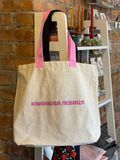
The bestselling item was our “Knyzhkova Levytsia” tote bag, followed by the Boriviter pin, the “Vpivaimosia literaturoiu” tote, the Leleka hair clip, Peonies and Leleka pins, the “Vpivaimosia literaturoiu” glass, the Motanka pin, the Boriviter hair clip, and the Leopards pin.
The popularity of designs inspired by Ukrainian cultural imagery — the motanka, stork, kestrel and peonies — was particularly good to see. At a book festival, readers do not necessarily leave with only another book. Sometimes they also take home a small sign of the cultural world they want to be part of.
What BestsellerFest Reminded Us About Bookshops
During the festival, we also asked visitors what they had already bought and what they were still looking for.
Their answers moved easily between Ukrainian classics, contemporary writing, fantasy, nonfiction and discoveries made simply by walking past a stand.
That is something physical book festivals still do exceptionally well.
Online search helps us find the book we already know we want.
A book festival can help us discover the book we did not yet know we wanted to read.
BestsellerFest ended on August 9, but we returned with more than sales figures. We saw which books readers picked up first, which titles started conversations, what they recommended to one another and which unexpected books became favourites.
For Knyzhkovyi Lev, that matters.
A good bookstore is not simply a place with many books. It is a place that pays attention to its readers.
Thank you to everyone who stopped by our stand, talked to us about books, chose something new to read or took a little piece of Knyzhkovyi Lev home.
See you at the next book festival.