


|
Quantity
|
Out of stock
|
||
|
|
|||
|
|
|||
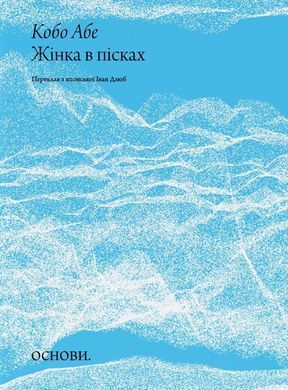
“The Woman in the Dunes” is one of the key novels of 20th-century Japanese literature: dry, tense, physical, and almost physically tangible. It is often compared to the prose of Kafka and Camus, but the absurdity in Kobo Abe is not abstract. It grinds on the teeth, sticks to the skin, and every day fills the space around it anew.
Amateur entomologist Jumpei goes on vacation to catch insects and dreams of finding a new, unknown species. In a remote seaside village, he suddenly finds himself trapped: unable to get out of a house submerged in sand, he, like an insect in his own collection, remains imprisoned together with a mysterious woman. In this classic existential novel, the author questions the idea of human freedom and its purpose. The novel touches on sensitive issues in Japanese society, such as prejudice against the burakumin, a historically marginalized group, and criticizes the post-war corporate culture that encourages alienation and even suicide. The Woman in the Sands won the Yomiuri Literary Prize in 1962. In 1964, the book was adapted into a film by director Hiroshi Teshigahara.